


Zipper Lock Screen Customizer
Midas Studio App
I tried Zipper Lock Screen Customizer as a small personalization tool rather than treating it like a full phone makeover. Its purpose is straightforward: it lets me replace a standard lock screen with a zipper-style design and choose from a large collection of wallpaper looks. That narrow focus is also its appeal. I do not need to rebuild my launcher, install a complete theme system, or learn a complicated editor just to make the first screen I see feel more personal.
The app sits in the Art & Design category and comes from Midas Studio App. It is free to use, rated for Everyone, and has reached over 100 thousand installs with an average score of 4.5 from roughly 1.8 thousand ratings. Those figures suggest that the concept is easy for many people to understand, although they do not tell me whether every device handles a custom lock screen in exactly the same way. I found it most interesting as a visual customization layer, not as a replacement for the phone’s built-in security system.
What the zipper approach feels like in daily use
The central idea is visual rather than technical. Instead of opening the phone on a plain image, I get a zipper-themed presentation that makes unlocking feel more playful. The effect works best when the wallpaper and zipper style are chosen together. A bright, highly detailed background can make the screen look busy, while a simpler image gives the zipper a clearer role.
The collection is advertised as offering over 1,000 HD wallpaper styles and custom zipper designs. I would not choose randomly and stop there. The better workflow is to first decide what mood I want—minimal, colorful, cute, dark, or decorative—and then look for a zipper treatment that does not fight the image. This matters because the lock screen is viewed for only a few seconds at a time. Strong contrast helps the time and notification areas remain readable, while excessive decoration can make the screen feel cluttered.
In my normal routine, the app makes the most sense when I want a visible change without committing to a new launcher. I can keep the rest of the phone familiar while giving the lock screen its own identity. That is useful for someone who likes changing wallpapers with the seasons, matching a phone case, or creating a more distinctive look for a secondary device.
Related News

Why WhatsApp Messenger Still Makes Everyday Communication Feel Easy

Jurassic World: The Game Is the Better Dino Tycoon for Strategic Players

Threads in Real Life: Who Should Join, Lurk, or Leave

How SHEIN Turned Shopping Into an Endless Content Feed

How to Make Fortnite Feel Smarter on Mobile

Should You Switch to Microsoft Outlook on Mobile?
There is also a practical trade-off. A decorative lock screen can be enjoyable when I am opening the phone casually, but it adds visual activity to a part of the interface that many people prefer to keep calm. If I check notifications frequently, the zipper presentation may feel like an extra step in the experience rather than a benefit. I would recommend trying a restrained design first instead of immediately choosing the most elaborate option.
Choosing a design that remains usable
My most useful tip is to judge a wallpaper at the size and brightness of the actual phone, not only from a preview. Fine details that look attractive in a selection screen can become distracting once the clock, notification icons, and unlock controls appear over them. A darker background can also make small interface elements easier to notice, while a very pale image may reduce the sense of separation.
I would make a short list of two or three favorites rather than repeatedly changing the screen throughout the day. Frequent switching is fun while exploring, but it makes it harder to tell which style is genuinely comfortable. After choosing one, I would leave it in place through a normal morning and evening routine. The right design is not necessarily the most eye-catching one; it is the one that still looks clear when I am in a hurry.
Gallery
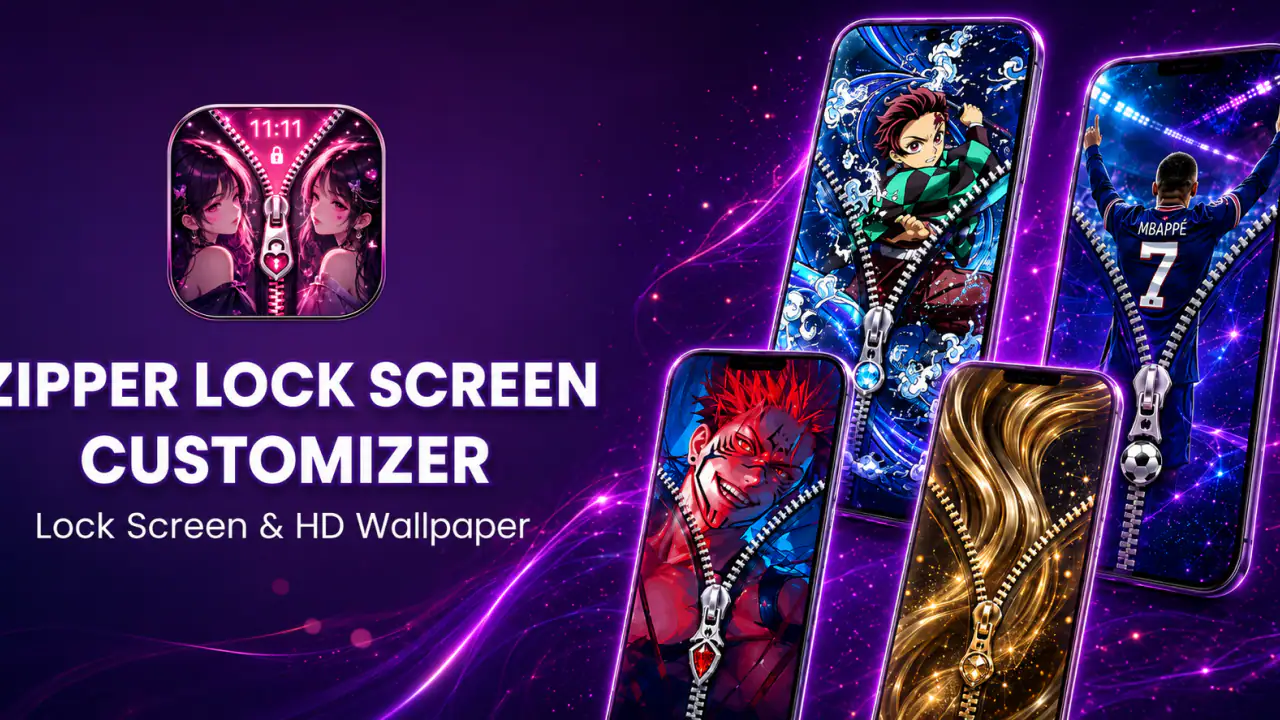
Another non-obvious consideration is consistency. If the phone already uses a colorful home screen, a quieter zipper lock screen can create a useful transition. If the home screen is plain, a more expressive lock screen can provide the personality instead. Thinking about both screens together prevents the customization from feeling accidental.
How it compares with ordinary wallpaper changes
The usual alternative is the phone’s own wallpaper picker. That option is normally simpler and more closely integrated with the operating system, especially for people who want a clean lock screen with no extra visual layer. Built-in tools are also the safer choice when the exact behavior of notifications, biometric unlocking, or system shortcuts matters more than appearance.
This app has a different strength: it gives the lock screen a themed interaction and brings many zipper-focused visual choices into one place. A standard wallpaper tool may offer more predictable system behavior, but it will not provide the same decorative identity. Dedicated theme apps can sometimes affect more parts of the interface, which is useful for a complete makeover but excessive if I only want to change the lock screen.
For me, the decision is simple. I would choose this app when the zipper effect is the reason I am customizing the phone. I would stay with the built-in option when I want maximum simplicity, a distraction-free screen, or the least possible change to the normal unlocking flow.
Trust begins with visible choices
Because a lock screen appears before the phone is fully open, I pay closer attention to what an app asks me to do than I would with a basic image editor. A responsible setup should make it clear which choices are related to appearance and which are connected to the phone’s unlocking experience. I look for understandable prompts, readable labels, and a way to leave without accepting an option I do not want.
I do not treat a polished design as proof that an app is harmless, and I do not treat a large wallpaper collection as proof of good privacy practices. My approach is to read every permission prompt at the moment it appears and ask whether it makes sense for the action I am taking. If I am only browsing wallpaper styles, a request that seems unrelated to that task deserves caution rather than an automatic approval.
The same principle applies to account controls. I prefer personalization tools that let me explore the main experience without pressuring me into an account, and I want any sign-in or profile choice to be understandable. If a screen presents several buttons, I slow down to identify which one changes the lock screen and which one might lead to another service or setting.
These are not reasons to avoid the app automatically. They are habits I would use with any application that changes a visible part of my phone. The safest experience comes from making deliberate choices instead of tapping through setup screens simply to see the first design.
Permissions and data-sensitive moments
The most sensitive moment is not browsing a wallpaper thumbnail; it is enabling whatever access the phone requires for a lock-screen customization tool to appear at the right time. That is where I would pay attention to the wording of the operating system prompt. I would grant only the access that is clearly tied to the selected function and would revisit the phone’s settings later if I changed my mind.
I would also separate image selection from personal content. If the app lets me choose an image from the device, I would select a picture that does not expose private documents, screenshots, or identifiable information unless I am comfortable using it as a visible lock-screen background. A lock screen is seen by anyone who looks at the phone, so privacy is not only about the app; it is also about the image I choose.
Notifications deserve similar care. A decorative lock screen can make alerts more prominent, but the screen may also be visible in public or around other people. I would check the phone’s notification preview settings and hide sensitive message text when necessary. This is a useful distinction: changing the appearance of the lock screen should not accidentally reveal more information than the standard screen did.
I would not assume that installing a free app means there are no trade-offs. Free is convenient, but it makes me more attentive to the screens shown during setup and to any optional choices presented there. I would avoid enabling anything I cannot explain in plain language, and I would remove the customization if it became difficult to understand what was active.
Keeping control over the phone’s normal security
My preferred way to test a visual lock-screen app is to keep the phone’s existing security method in mind before making changes. A zipper animation may change the presentation, but I still want the device’s normal PIN, pattern, password, or biometric process to remain clear and dependable. I would never replace a strong security habit with a decorative gesture simply because it looks attractive.
This is especially important for people who use their phones for banking, work, travel, or private conversations. The app is a customization layer, so I would judge it by whether it complements the phone’s security routine rather than obscuring it. If I had to choose between a more attractive effect and a faster, clearer unlock process, I would keep the clearer process.
There is a practical test I recommend: lock the phone, unlock it several times using the method I normally rely on, and check what happens when I receive a notification. I would repeat that test after changing the wallpaper or zipper style. This catches the kind of friction that is easy to miss while casually browsing designs, such as text blending into the background or an animation making the first interaction feel less direct.
I would also test after restarting the device. A customization that looks fine immediately after setup should remain understandable after the phone has been off or after the operating system has updated its normal startup behavior. If anything becomes confusing, the right response is to return to a simpler configuration rather than keep troubleshooting a decorative feature that is not essential.
Who will enjoy it, and who should skip it
I think the app is a good fit for people who enjoy visible personalization, want a themed lock screen, and do not need a complete redesign of their phone. It can also suit younger users because the content rating is Everyone, although parents should still review setup choices with children and make sure the phone’s regular security settings remain appropriate.
It is less suitable for someone who wants a completely minimal interface, dislikes animated or decorative unlocking effects, or depends on the most direct system-integrated behavior. I would also hesitate to recommend it to a person who is uncomfortable reviewing permissions and settings. That is not a criticism of the concept; it is simply the reality that adding a customization layer requires a little more attention than selecting a standard wallpaper.
People with older phones should be realistic about expectations. The minimum operating-system requirement is Android 8.0, and the current release is version 1.1.1. Meeting that requirement means the app can be considered on compatible devices, but it does not guarantee that every manufacturer handles lock-screen behavior identically. I would test it on the actual phone rather than deciding from the operating-system number alone.
For a shared or work-managed device, I would be even more conservative. A company policy or device administrator may control lock-screen behavior, and a decorative tool may not be worth disrupting a standardized setup. On a personal phone, the choice is more flexible; on a managed phone, reliability and policy compliance should come first.
A realistic everyday setup
Imagine I am preparing my phone for a new case and want the screen to match without changing the home screen. I would open the app, browse several wallpaper styles, and choose a background with enough empty space for the clock and alerts. Then I would select a zipper design that contrasts with the image instead of blending into it. Before leaving the setup, I would read each access request and keep my existing unlock method in place.
For the next day, I would use the phone normally: checking the time, opening messages, unlocking with biometrics or a passcode, and viewing the screen in both bright and dim conditions. If the zipper effect looked good but made notifications harder to read, I would change the wallpaper before abandoning the whole idea. If the interaction still felt slower than the standard lock screen, I would return to the built-in option.
This workflow shows where the app adds value. It is not about installing a design and forgetting the phone’s practical needs. It is about treating the lock screen as a small piece of visual design while checking that it remains readable, private, and easy to control.
My cautious verdict
I enjoyed the focused nature of Zipper Lock Screen Customizer. It does not try to be a general phone-management tool; it concentrates on making the lock screen more expressive through zipper-themed customization and a broad wallpaper selection. That makes it easy to understand and potentially fun for anyone who finds ordinary wallpaper changes too limited.
My recommendation comes with a clear condition: use it as decoration, not as a substitute for the phone’s security decisions. Read prompts carefully, choose images with public visibility in mind, check notification previews, and test the result through a normal day. Those steps preserve user control while still allowing the visual change to be enjoyable.
The app is free, available for Everyone, and supported on Android 8.0 or later, so it is accessible to a wide range of personal devices. Still, accessibility is not the same as universal suitability. If you want a playful, noticeable lock screen and are willing to review the setup thoughtfully, I think it is worth trying. If your priority is the cleanest, most predictable unlocking experience, the phone’s standard wallpaper controls remain the better choice.
After using it, my final view is balanced: the best result comes from choosing restraint over novelty. A well-matched wallpaper, readable controls, and careful attention to permissions make the customization feel intentional. Without those checks, the zipper effect can become visual noise. For the right user, though, it is a simple way to give the first screen of an Android phone a more personal character.
FAQs for Zipper Lock Screen Customizer
What is Zipper Lock Screen Customizer and how does it work?
Zipper Lock Screen Customizer is an Android personalization app that lets you replace a standard lock screen with a zipper-style design. After selecting a zipper theme, background, and related visual options, you typically unlock the device by dragging the zipper handle. It is mainly intended for appearance and entertainment, rather than providing advanced security features like biometric authentication or encryption.
Does Zipper Lock Screen Customizer provide real security for my phone?
Users should not assume that the zipper animation is a complete security solution. Depending on the version and device, the app may function as a decorative lock-screen overlay while the phone’s original PIN, password, pattern, or biometric protection remains the actual security layer. Before relying on it, check the app’s settings and test whether the underlying Android lock method is still enabled.
Can I customize the zipper lock screen and its appearance?
Customization is generally the main reason to install this app. You may be able to choose from different zipper styles, backgrounds, colors, handle designs, and display effects, although the exact options can vary between versions. Some features may require watching advertisements or using in-app purchases. Review the available settings after installation to confirm which themes and controls are included.
Does Zipper Lock Screen Customizer affect battery life or phone performance?
The app is usually lightweight, but any application that runs over the lock screen or uses animated effects can consume additional system resources. Battery impact is often small on modern devices, though it may be more noticeable on older phones or when animations, sounds, and notifications are enabled. If you notice delays, excessive battery use, or repeated crashes, disable unnecessary effects or remove the app.
What permissions does the app require, and is it safe to install?
The required permissions can differ by release, so users should inspect the Google Play listing and Android permission screen before installation. A lock-screen customizer may request permissions related to displaying over other apps, notifications, wallpapers, or device startup. Install it only from a trusted source, read recent reviews, and avoid granting access that seems unrelated to its basic customization purpose.
Pros
- Lets you personalize the lock screen with custom zipper styles and backgrounds.
- Offers a playful way to refresh the appearance of an otherwise standard lock screen.
- Simple controls make basic customization accessible to less experienced users.
- Usually lightweight
- so it should not require much storage or processing power.
- Preview options help you check the design before applying it to the lock screen.
Cons
- May not replace the system lock screen on every Android device.
- Some designs and customization options may require in-app purchases.
- Lock-screen overlays can occasionally conflict with notifications or other apps.
- Frequent animations may consume extra battery on older or budget phones.
- Privacy depends on the permissions requested by the app and its developer.


